‘Blog’

  • Blog
  • May 15th, 2013

Op-ed by Rideau Institute Special Advisor Gar Pardy

Quatar’s quiet understanding of Canadian politics

Gar Pardy
Embassy News
May 8, 2013

Canadians can be forgiven if they have trouble recognizing Qatar or its significance to Canada. That has changed in the last few days.

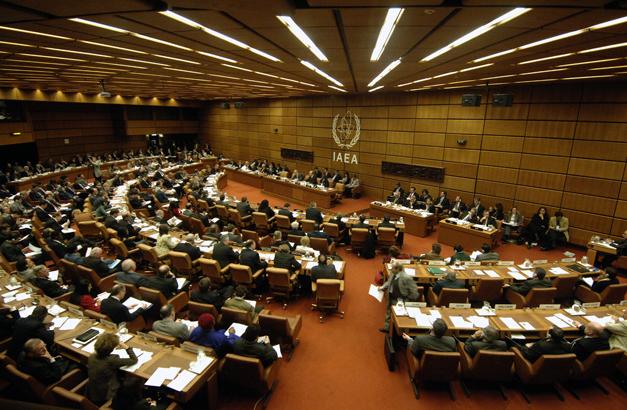
Qatar, with surprising adroitness, offered to host the International Civil Aviation Organization—and in doing so wrest it away from its 66-year home in Montreal.

That this is a serious matter is readily apparent from the government’s shrill reaction. Immediately, a Team Montreal was formed including: a minister from the separatist government in Quebec City; a beleaguered, temporary mayor from Montreal; and John Baird, the Canadian foreign minister, who a few weeks ago was boasting about his successful repairing of relations with several Gulf states, including Qatar.

From the prime minister down, all hands are now on deck to beat back this dastardly attack on an international institution that has helped make Montreal into a modern cosmopolitan city.

The government, for its part, readily understands what is at stake by the Qatari offer, even though it has refused to admit that it is connected to its policy of uncritical support of Israel.

First, it is a direct attack on Canadian foreign policy, which in the last seven years has bled the support of many countries around the world. Despite Mr. Baird’s whirlwind visits to countries around the world and his polite reception, countries in the Middle East, Africa, Asia, and Latin America have been dismayed, if not alarmed, at the significant changes in Canadian foreign policy.

A foreign policy that, since the days of the Second World War, has carefully and successfully sought to bridge some of the deep international divides and provides support for amelioration of the human condition.

One would not expect it from such a distant country but, second, the Qatari offer for ICAO represents a quiet understanding of Canadian politics. The government is in single digit support mode in Quebec and in some measure it is a direct result of its foreign policy which finds little support in that province.

As the issue continues to develop over the next several months, there can be every expectation that members of the Quebec government and numerous others in the province will publicly conclude that Ottawa’s foreign policy is the root cause of the problem. The mad rush by Mr. Baird to puff up Canadian defences against the Qatari offer says more about electoral support in Quebec than anything else.

It is still early days in the playing out of the Qatari offer but it is not an issue that will disappear. The failure of Canada to find sufficient support for a seat on the Security Council against Portugal in 2010 should have been a large warning to the government.

Instead it has made its international position even worse by its ever-deepening support of Israel, even to the extent of trying to generate support against Palestine obtaining observer state status in the UN General Assembly.

As with the Keystone XL pipeline issue with the United States, the government refuses to understand the connectedness of policy. Its earlier rejection of the Kyoto Protocol to the UN Framework Convention on Climate Change and a variety of other decisions strongly supports the view that it was a denier of climate change.

This provided the solid backdrop for a wide variety of American and Canadian organizations to attack the building of the pipeline. In recent days the government has sought to portray its sow’s ear environmental policy into a silk purse, but it is seen as a move of desperation and certainly not one involving principle, Mr. Baird’s favourite word.

So it is with the government’s policy on Israel. The divide with the 22 members of the Arab League and even the 57-member Organization of the Islamic Conference is now beyond reconciliation. There are of course deep and profound differences between the countries making up these organizations, but the one issue around which they can usually coalesce is that of Israel and Palestine. These countries represent nearly half of the votes needed by Qatar to support its offer for the move of ICAO from Montreal.

As well, the Qatari move fits into a broader effort for diversification of who manages world affairs and from where it is done. The move from a G7 directing body to a G20 one has been painless and regarded by most as a reality-based one.

At the same time, of the 17 specialized agencies of the United Nations, of which ICAO is one, none are headquartered south of 35 degrees north (approximately Washington).  London, Paris, Geneva, Vienna, Rome, and Madrid are all headquarters cities, some with more than one specialized agency. But Beijing, Pretoria, Tokyo, Sao Paulo, Doha, and New Delhi have been bereft of such international enhancement.

Perhaps in all of this, Mr. Baird’s naïve and nativist approach to foreign policy will undergo some change. Already there is an indication of this. He is quoted as saying that “if we can make that deal [to retain ICAO] even better, we’re prepared to do so.” And in another interview Mr. Baird said Canada will not be “outbid.”

It is novel to see Mr. Baird move away from foundational principles in the conduct of foreign policy and see the edges of old fashioned money emerge. If the CEO of SNC-Lavalin were to say that, the RCMP would probably pay him another visit.

Gar Pardy is a former ambassador and comments on foreign and public policy issues from Ottawa.

Read More
  • Blog
  • May 8th, 2013

Steven Shrybman to receive Rideau Institute Leadership Award

May 8, 2013

Ottawa – The 2013 Rideau Institute Leadership Award will be presented to public-interest lawyer Steven Shrybman for his many years of work and achievements in promoting democracy, sovereignty and environmental protection.

The Rideau Institute Leadership Award is given by the Rideau Institute Board of Directors to a person or group for making an outstanding contribution to a progressive vision of Canada.

Steven Shrybman is a partner in the law firm of Sack Goldblatt Mitchell and practises international trade and public interest law in Ottawa, Canada. His professional career has placed him at the centre of many of the important challenges facing Canada over the last 25 years.

As one of Canada’s leading advocates, Mr. Shrybman has championed Canadian sovereignty and environmental protection in the face of free trade, privatization and encroaching corporate interests.

Among his many achievements, he stopped the first foreign take-over under the Investment Canada Act in 2009, and rolled back the rush toward privatization by preventing the selloff of Hydro One in 2002.

Most recently, Mr. Shrybman has turned to protecting our democracy by uncovering the Robocalls Scandal, and representing electors in six federal riding who have asked the court to annul the results of the May 2011 election in those ridings.

Steven Shrybman will be presented with the Rideau Institute Leadership Award on June 5th, at the 2013 Rideau Institute Social in Ottawa.

The Rideau Institute is an independent research, advocacy and consulting group based in Ottawa.

-30-

For more information, contact:

Kathleen Walsh
Operations Coordinator, Rideau Institute
o. 613-565-9449 x 21
e. kwalsh@rideauinstitute.ca

Read More
  • Blog
  • May 6th, 2013

Kathleen Ruff Op-ed: Russia, Zimbabwe pick up the asbestos baton from Canada

Canada is no longer in the asbestos business but its message is clear: if you can make money from a hazardous substance, then oppose safety requirements.

Kathleen Ruff
Toronto Star
May 5, 2013

In February last year, an Italian court sentenced two asbestos industrialists to 16 years in prison for criminal conduct in having for years covered up the hazards of asbestos and failed to implement safety measures.

As a result of this coverup, thousands of workers and nearby residents of their Eternit asbestos-cement factory at Casale, Italy, died painful deaths from asbestos-related diseases. And the death toll at Casale continues to rise.

Yet the asbestos industry is fighting to carry on this same deadly coverup today. To date, Canada has been the industry’s chief political ally in achieving this goal. But this is about to change.

At the UN Rotterdam Convention conference in Geneva this coming week, asbestos lobbyists will be working to defeat the recommendation of the convention’s expert scientific committee to put chrysotile asbestos on the convention’s list of hazardous substances.

The convention does not ban trade in hazardous substances; it simply requires that countries act responsibly and obtain prior informed consent before shipping a listed hazardous substance to another country. This allows developing countries — where asbestos and most hazardous substances are shipped nowadays — to be informed of the dangers. They thus have the right to refuse the product or, at least, have a better chance of protecting their population from harm.

This will be the fourth time that the recommendation to list chrysotile asbestos as hazardous will be presented to the UN conference. Chrysotile asbestos represents 95 per cent of all asbestos used over the past century. The scientific consensus is clear that all forms of asbestos cause deadly diseases. Other forms of asbestos are already on the convention’s list but not chrysotile asbestos, representing 100 per cent of the global asbestos trade today.

At previous conferences, Canada played the role of saboteur-in-chief, refusing to allow chrysotile asbestos to be put on the list. Even though chrysotile asbestos is listed as a hazardous substance under Canadian law, Canada maintained that, once it left Canadian shores (as virtually all of it did because Canadians did not want asbestos in their homes and schools), it should no longer be treated as a hazardous substance.

At the last conference in 2011, when, finally, consensus had been reached to list chrysotile asbestos, Canada alone refused consent, single-handedly blocking the listing.

The Harper government has stated that it will not block the listing at the upcoming conference. But this turnaround is not because the government supports the convention’s mandate of health protection. Instead, it is for totally cynical reasons.

Harper’s Quebec lieutenant, Christian Paradis — a longtime ally of the Quebec asbestos industry — explained that, since the new Parti Québécois government has refused to subsidize the bankrupt Quebec asbestos industry, thus causing its shutdown, there would be no point in Canada blocking the listing of chrysotile asbestos.

Canada’s message to the world is clear and sordid: if you can make money from exporting a hazardous substance, then oppose safety requirements, as they might damage profits. If you have no vested interest, then don’t bother to oppose.

If other countries follow Canada’s example, the convention becomes worthless.

Canada does not even intend to support the listing of chrysotile asbestos. Instead, it will maintain a cowardly, ambiguous silence.

This week, Russia, the world’s biggest asbestos exporter, will take over Canada’s role of sabotaging the convention. Of the 1 million tons of asbestos exported in 2011, Russia exported 750,000. Russia, therefore, has a big financial interest in the continued uncontrolled export of asbestos and continued coverup of its hazards.

Russia will be attending for the first time as a party to the convention. It has indicated that it intends to use its new status to prevent chrysotile asbestos from being put on the hazardous substance list. In Russia, with a population of 141 million people, there is not a single scientist or a single scientific organization that opposes the government’s pro-asbestos policy. Or, at any rate, there is not a single scientist or scientific body that dares to do so publicly.

Zimbabwe also will be attending as a party for the first time and also plans to oppose the listing. Zimbabwe wants to reopen its asbestos mines and resume asbestos exports. Safety measures are not on its wish list.

Canada’s heartless asbestos legacy lives on, inherited by Russia and Zimbabwe. Many will die painful, unnecessary deaths as a result. We have a lot to answer for.

Kathleen Ruff is co-coordinator of ROCA (Rotterdam Convention Alliance) and will be attending the Geneva conference.

Read More

Michael Byers Op-ed: Canadian peacekeepers should be in Mali – It’s in our national interest

Michael Byers
The Globe and Mail
April 29, 2013

The United Nations Security Council has just approved a peacekeeping mission for Mali. Canada, with decades of experience in these operations, really should take part.

The UN-led force will not replicate the work of the French soldiers who, since January, have wrested northern Mali out of the hands of a small band of Islamic militants. The job now is different: helping Mali’s army maintain control over its territory.

Last month, Prime Minister Stephen Harper was asked about Canadian participation in a potential peacekeeping mission. “We are not looking to have a combat, military mission there,” he replied. “We will certainly be providing development and humanitarian assistance. But the details of what our long-term engagement may be are still the subject of discussions.”

Those discussions should take into account that, as United Nations spokesman Kieran Dwyer has said, “Canada is in a very strong position to play a role.”

Canada has been involved with Mali for decades, contributing large amounts of development aid and foreign investment. Canada also has French-speaking troops who could speak directly with Malians, as well as with the francophone troops from Chad, Niger and Senegal who will constitute most of the peacekeeping force.

Canadian soldiers would be highly valued as “force-multipliers” who maximize the impact of other, less well-trained troops. For nearly half a century, Canada filled this niche in every UN peacekeeping mission.

Although Canada has disengaged from peacekeeping in recent years, that shift was a political decision. When Canada’s military leaders sought to have General Andrew Leslie appointed commander of the UN peacekeeping mission in the Congo in 2010, it was the Harper government that intervened and claimed that Canada’s commitments to the NATO mission in Afghanistan precluded his taking part.

The government’s thinking was influenced by a group of conservative commentators who argued that peacekeeping is passé. Jack Granatstein and others pointed to the failed UN missions in Bosnia, Somalia, and Rwanda, where peacekeepers were forced – by inadequate mandates, equipment, or numbers of personnel – to stand by while civilians were killed.

But critics of peacekeeping overlooked the core reason for those failures of the early 1990s, namely a lack of political will, not on the part of the UN as an organization, but on the part of its member states.

The critics failed to acknowledge that a learning process was underway, as the end of the Cold War enabled the UN to take on more robust and complex operations. Peacekeeping has since evolved substantially, with new missions – including the new one in Mali – being given strong mandates to use “all necessary measures” to protect civilians, as well as the weapons necessary to do the job.

The critics also failed to mention the UN’s peacekeeping successes. One mission played an important role in stabilizing Cambodia and running an election that resulted in a widely supported government. Other missions in Mozambique and East Timor had similar outcomes. In El Salvador, UN peacekeepers demobilized a powerful guerrilla organization and trained a national police force; in Sudan, their work led to the end of the civil war, a referendum, and the relatively peaceful, recent secession of South Sudan.

The RAND Corporation, an American think-tank, analyzed 16 state-rebuilding missions – eight conducted by the UN; eight by the United States – during the period from 2003 to 2005. Seven of the UN missions had succeeded, whereas only four of the U.S. missions did.

The RAND report concluded: “Assuming adequate consensus among Security Council members on the purpose for any intervention, the United Nations provides the most suitable institutional framework for most nation-building missions, one with a comparatively low cost structure, a comparatively high success rate, and the greatest degree of international legitimacy.”

The point about cost deserves emphasis: UN peacekeeping accounts for less than one per cent of worldwide military spending. In 2010-2011, Canada spent $7-billion on its Afghanistan mission, with just 2500 soldiers involved. In 2012-2013, the UN will spend the same amount – $7-billion – on its 15 missions involving more than 80,000 soldiers.

Most UN member states are cognisant of the successes and efficiencies of peacekeeping, which is why they continue to establish and fund more missions. The UN currently has more troops in conflict zones than any actor in the world apart from the U.S. Department of Defense.

What most current UN peacekeeping missions lack are well-trained soldiers from the developed world. Indeed, the single greatest challenge for the peacekeeping mission in Mali concerns the relatively poor training of the African troops that will be deployed. Just one thousand Canadian soldiers could make all the difference, providing leadership, mentoring, and a proven ability to operate in desert conditions.

It is clearly in Canada’s national interest to support the Mali mission, for it is important that al-Qaeda not find a safe haven there.

Just as importantly, the Mali mission provides an opportunity to arrest the decline in Canada’s “soft power” – the ability to persuade that is the principal currency of diplomacy for middle-power states. When Canada lost its bid for a seat on the Security Council in 2010, foreign observers identified our government’s abandonment of UN peacekeeping as a contributing factor.

Stephen Harper may resent losing that UN vote, but it’s time to move on. The Prime Minister’s carefully worded refusal to rule out Canadian participation in a peacekeeping mission in Mali suggests that he sees the potential benefits to Canada – and to his own influence on the world stage.

Michael Byers holds the Canada Research Chair in Global Politics and International Law at the University of British Columbia.

Read More
  • Blog
  • April 26th, 2013

Op-ed – Minister at Sea: Peter MacKay’s Latest Folly

Pricey, plodding Arctic/Offshore Patrol Ships ill-fitted to their planned missions.

By Michael Byers and Stewart Webb
The Tyee
Wednesday, April 24

Peter MacKay is no stranger to maritime pubs. He could probably recite the words of Stan Rogers’ Barrett’s Privateers while drunk and standing on his head. But does Canada’s defence minister realize that he’s fast becoming the 21st-century version of Elcid Barrett, who led a group of blindly ambitious men on a dangerous folly?

The problem concerns the Royal Canadian Navy’s long-promised Arctic/Offshore Patrol Ships (“A/OPS”), which are due to be built in Halifax and based there and in Esquimalt, B.C. The A/OPS are the new “Antelope,” Barrett’s 18th-century sloop that the song describes as a “sickening sight” with “a list to the port and her sails in rags.”

It took the Antelope “two whole days” to catch an American ship that was “broad and fat and loose in the stays” and “lay low down with gold.” The A/OPS, with a top speed of just 17 knots, will have even less chance of catching today’s drug and people smugglers.

Part of the problem is that the A/OPS will have ice-strengthened hulls, which are heavier and therefore slower than those of purpose-built patrol vessels. Originally, this handicap was to be ameliorated by building the A/OPS as “double-acting” ships — with a bow designed for high-speed sailing in open water, a stern designed for breaking ice, and “Azipod” propeller units that can rotate 180 degrees.

But for cost-saving reasons, this proven technology was removed from the plan.

The remarkable slowness of the A/OPS is highlighted by comparisons with patrol vessels operated or being built by other countries. Australia’s Armidale-class and France’s L’Adroit Offshore Patrol Vessel both have top speeds of 25 knots, while the United States’ Sentinel-class has a top speed of 28 knots. Russia’s Svetlyak-class has a top speed of 32 knots.

The “ice-strengthened” single-acting hulls will also be unstable; so much so that the A/OPS will not be able to launch or retrieve their helicopters in conditions above Sea.

State 3, which involves waves between just 0.5 and 1.25 metres. By comparison, Canada’s existing Halifax-class frigates can launch and recover helicopters in Sea State 6 with waves between four and six metres.

Stability is only partially a question of size: Australia’s Armidale-class patrol ships are just 56 metres long but can operate comfortably in four metre waves and survive cyclonic conditions.

The 18th-century Antelope also suffered from being under-armed, and had to come within two cables of the American ship to use its four-pound cannon. And thus, “with one fat ball the Yank stove us in.”

Originally, the A/OPS were supposed to be armed with a 40 mm “primary gun” as well as 12.7 mm guns for “self protection.” But for cost-saving reasons, the A/OPS will now carry just one 25 mm cannon. By comparison, the American Sentinel-class is fitted with a 25 mm high-speed chain-fed cannon as well as four .50 calibre machines guns. The Russian Svetlyak-class is armed with a 76.2 mm AK-176M cannon and a six-barrel 30 mm AK-630 gun.

Then there is the issue of cost. The choice of a new and unproven design has resulted in a remarkably expensive procurement. The original, long-standing construction budget for the A/OPS is $3.1 billion for just six to eight vessels, with an additional $4.3 billion for operations and maintenance over a projected 25-year lifespan.

By comparison, the United States is spending just half that amount — $1.5 billion — for up to 34 of the Sentinel-class Fast Response Cutters. Australia obtained its Armidale-class fleet for $553 million, including the design and construction of 12 ships and 15 years of support and maintenance.

Financial constraints will bite even deeper as the Navy struggles to complete the A/OPS within a procurement budget that was set in 2007 and is continuously being eroded by inflation.

This problem is illustrated by the audit of another procurement — the Navy’s Joint Supply Ships — that was carried out by the Department of National Defence’s own “Chief Review Services” in 2011. It found that inflation had improperly been assessed at 2.7 per cent instead of the 3.5 to 5 per cent inflation factor “acknowledged to be prevalent in the shipbuilding industry.” The longer the A/OPS procurement drags on, the less capable the resulting vessels will be.

The litany of mistakes and compromises has serious consequences. At stake is not just the $7.4 billion being spent on the A/OPS and their maintenance, but also the Navy’s ability to operate effectively. It is time to stop the A/OPS procurement, and quickly, before the actual construction contract is signed.

The Arctic role should be left to the Canadian Coast Guard, which already handles it well. If necessary, light guns could be installed on its icebreakers.

On the Pacific and Atlantic coasts, purpose-built high-speed offshore patrol ships should be provided to the Navy. And while the ships should be built in Canada, a proven design must be used.

From F-35 fighter jets to the replacements for Canada’s ancient Sea King helicopters and Buffalo search-and-rescue planes, defence procurement in Canada has become a gong-show of mistakes. But providing equipment for the men and women of the Canadian Forces is no drinking game. It’s time for Peter MacKay to find his feet.

Michael Byers holds the Canada Research Chair in Global Politics and International Law at the University of British Columbia. Stewart Webb is a research associate with the Salt Spring Forum. They are the authors of a report entitled “Titanic Blunder: Arctic/Offshore Patrol Ships on course for disaster,” recently published by the Canadian Centre for Policy Alternatives and the Rideau Institute.

Read More